

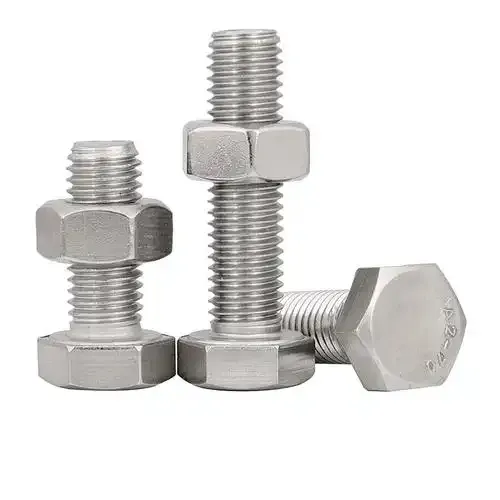

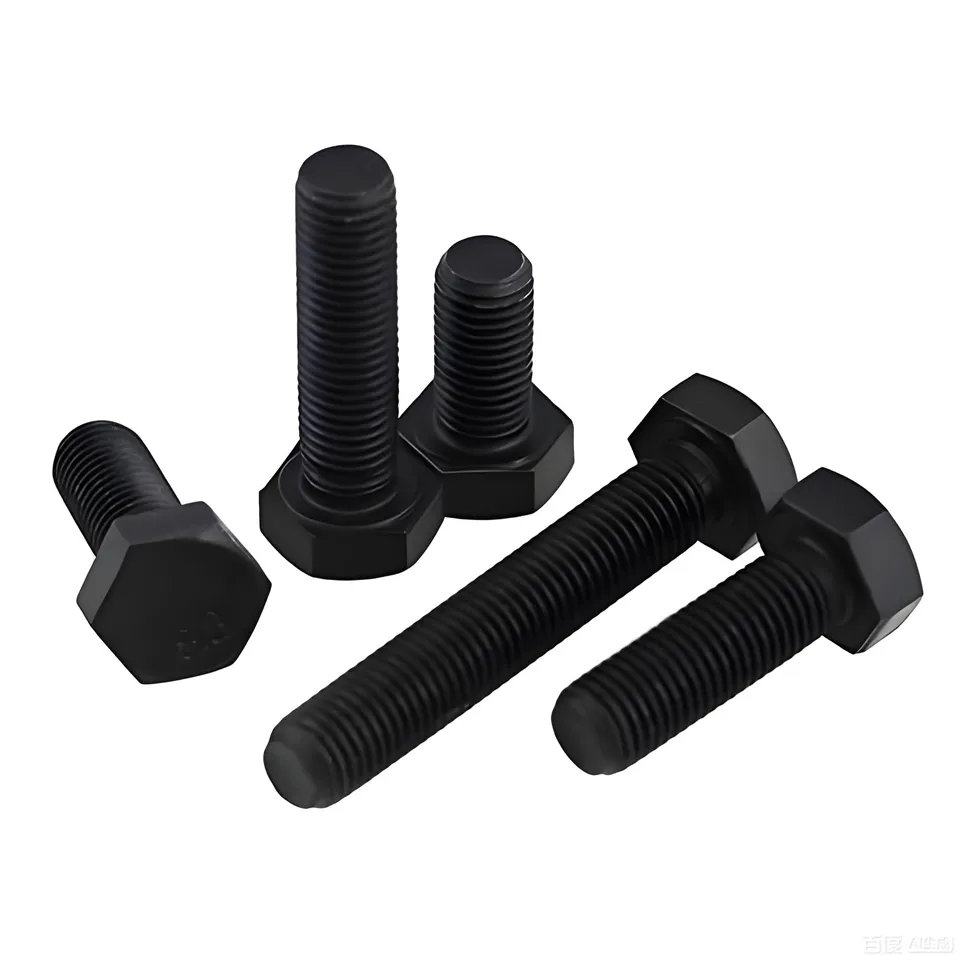
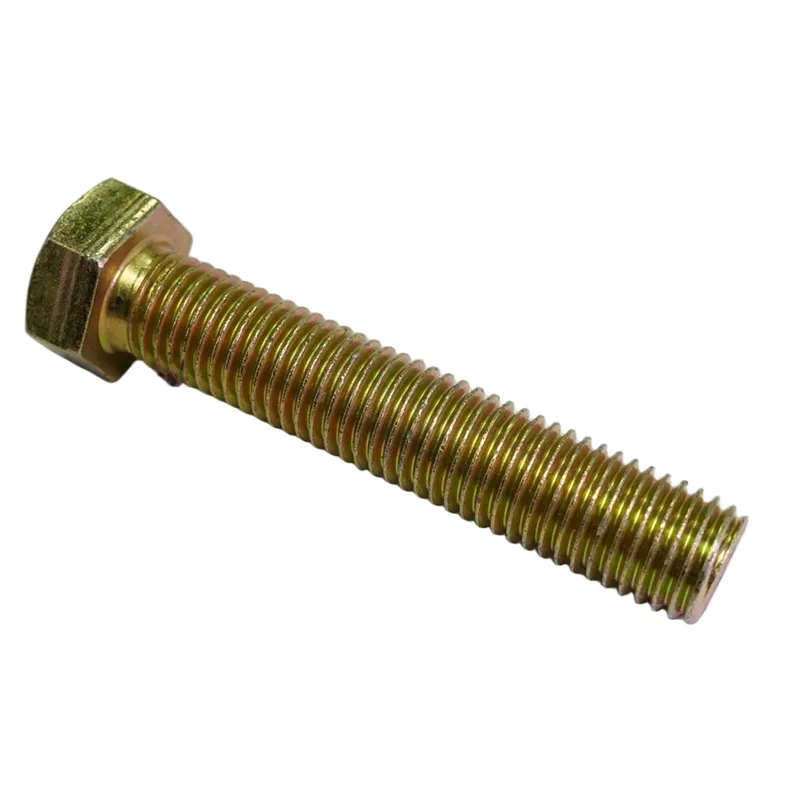

Din931 Din933 Hex Bolts
Product: HEX BOLTS
Standard: DIN931 DIN933
Raw material: Q 235 SWRCH35K 10B21 10B33 SWRCH45K,40CR,42CRMO,SS204 SS316 etc.
Surface: Plain,zinc plated,black oxide,H.D.G,etc.
Specification Range: DIA M3-M100,LENGTH 10MM-300MM
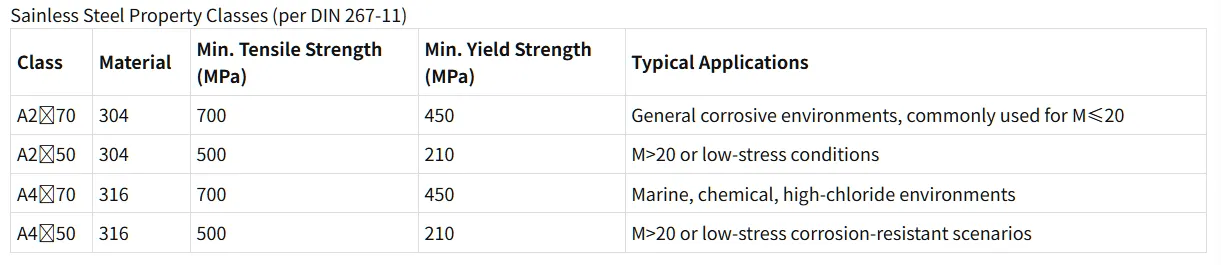
Property Class:4.6 4.8 5.6 5.8 8.8 10.9 12.9 A2-50 A2-70 A4-50 A4-70 etc
- Fast Delievery
- Quality Assurance
- 24/7 Customer Service
Product Introduction
Product: HEX BOLTS
Standard: DIN931 DIN933
Raw material: Q 235 SWRCH35K 10B21 10B33 SWRCH45K,40CR,42CRMO,SS204 SS316 etc.
Surface: Plain,zinc plated,black oxide,H.D.G,etc.
Specification Range: DIA M3-M100,LENGTH 10MM-300MM
Property Class:4.6 4.8 5.6 5.8 8.8 10.9 12.9 A2-50 A2-70 A4-50 A4-70 etc
DIN931/DIN933 ARE German standard for hexagon head bolts with a coarse/fine thread. It primarily specifies dimensions, tolerances, and performance criteria. While they were been superseded by ISO 4014/4017, it is still widely used and referenced

Core Production Standard
Base Standard:
DIN 931/933-1:1987 specifies bolts from M1.6 to M39, product grades A/B, including dimensions, tolerances, thread (6g), surface finish, and delivery requirements. General requirements are referenced in DIN 267-1. Mechanical properties are governed by DIN ISO 898‑1 (for carbon steel) and DIN 267‑11 (for stainless steel).
Equivalents and Replacements:
It is equivalent to ISO 4014/4017. Note that ISO 4014/4017 has minor differences in head dimensions for sizes M10, M12, M14, and M22. Care must be taken during procurement and design to ensure compatibility.
Product Grades:
Grade A: Applicable for nominal diameter d ≤ 24mm and length L ≤ 10d or 150mm.
Grade B: Applicable for nominal diameter d > 24mm or length L > 10d / 150mm.
The grade affects dimensional tolerances and geometric accuracy.
Key Manufacturing Process Points
Raw Material and Forming:
Materials:
Carbon steel (SWRCH, 45#, 40Cr), stainless steel (304/A2, 316/A4), alloy steel (42CrMo, etc.).
Forming: Cold or hot forging for the hexagon head. Thread rolling or thread cutting for the threads. For partial shank bolts, strict control over the length and diameter tolerance of the unthreaded portion is required.
Heat Treatment:
Carbon steel grades 5.6, 8.8, and 10.9 require quenching and tempering. Grade 8.8 requires quenching and tempering. Grade 10.9 requires higher hardenability and tempering stability.
Stainless steel is typically solution treated. Grade A2‑70 must ensure a minimum tensile strength of ≥700MPa.
Surface Treatment:
Carbon steel: Common treatments include black oxide, zinc plating (color or clear passivated), and dacromet.
Stainless steel: Pickling and passivation or as-finished.
For marine or chemical applications, hot-dip galvanizing or Teflon coating can be used to enhance corrosion resistance.
Inspection and Quality Control:
Dimensional checks using go/no-go gauges and vision systems.
Mechanical property testing includes tensile strength, hardness, impact, and wedge load tests.
Threads must meet 6g tolerance and pass full inspection with go/no-go gauges.
Property Classes and Mechanical Properties


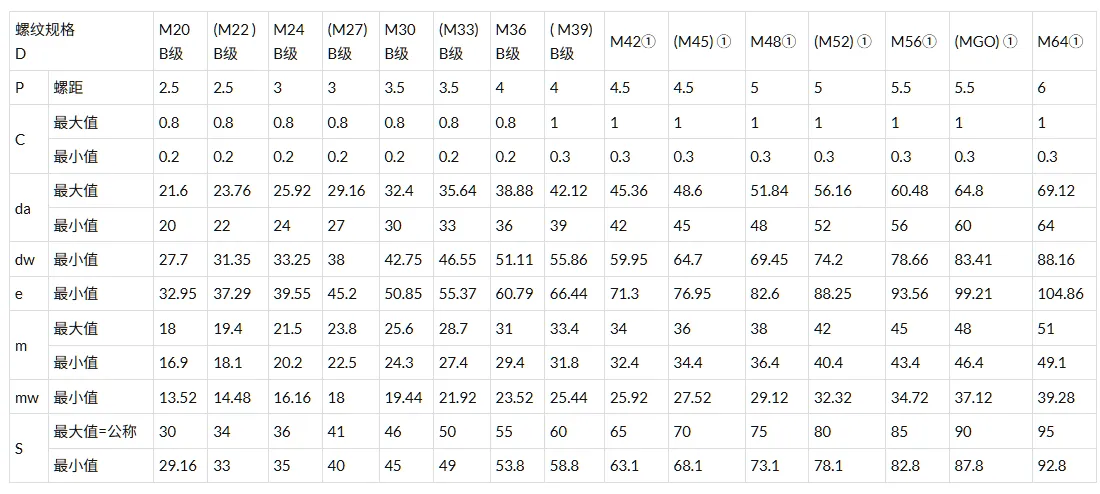
Application Fields
DIN931/933 HEX BOLTS WERE USED IN General Machinery:
Machine tools, gearboxes, pumps, valves, motors. Used for fastening housings, flanges, and supports. Class 8.8 is the most common.
01
Automotive and Construction Machinery:
Chassis, transmissions, engine accessories, crane booms. Class 10.9 is suitable for high-stress joints.
02
Energy and Chemical Industry:
Oil drilling platforms, pipeline flanges, pressure vessels, desulfurization equipment. A4‑70/A4‑50 stainless steel or dacromet-coated carbon steel is used for corrosion resistance.
03
Marine and Shipbuilding:
Deck equipment, cabin structures, seawater pipelines. 316/A4 stainless steel or hot-dip galvanized carbon steel is preferred to control chloride ion corrosion.
04
Construction and Steel Structures:
Steel frames, trusses, prefabricated components. Classes 5.6/8.8 are used for non-seismic joints, and Class 10.9 for high-strength connections.
05
Usage Precautions
Selection and Matching:
Choose the appropriate class based on load requirements (e.g., Class 8.8/10.9 for high-pressure flanges).
Select bolt length such that 1–2 threads are visible beyond the nut after tightening. Avoid lengths that are too long or too short, which can lead to insufficient preload or interference.
Installation Guidelines:
Ensure threads are clean, free of oil, rust, or damage. Apply anti-seize compound if necessary (especially for stainless steel to prevent galling).
Use a torque wrench and tighten uniformly according to the designed torque. Avoid applying force eccentrically. For stainless steel, use low-speed manual or pneumatic tools to prevent overheating and galling.
Safety and Taboos:
Avoid mixing different property classes or materials (e.g., carbon steel 8.8 with stainless steel A2‑70), as this can cause galvanic corrosion and strength mismatch.
High-strength bolts (10.9/12.9) must not be reused. They should be replaced after disassembly to prevent fatigue failure.
Packaging and Logistics
Main Packaging Materials: Small bags, small boxes, cartons, pallets, and iron drums
Customized packaging can be provided according to customer requirements.
Flexible bulk ordering schemes are available; transportation terms and delivery schedules are negotiable.
Certification and Guarantee
We are certified by ISO9001:2015, IATF16949:2016, and other international quality standard certifications.
Long-term quality assurance and comprehensive after-sales service are provided.
Established in 2005, our company has evolved over two decades of continuous development into a leading regional enterprise in the fastener industry with fully automated end-to-end production. With an annual output value exceeding RMB 130 million, our product range covers diverse market segments from mid-range to high-end and is distributed worldwide

Our factory & quipment
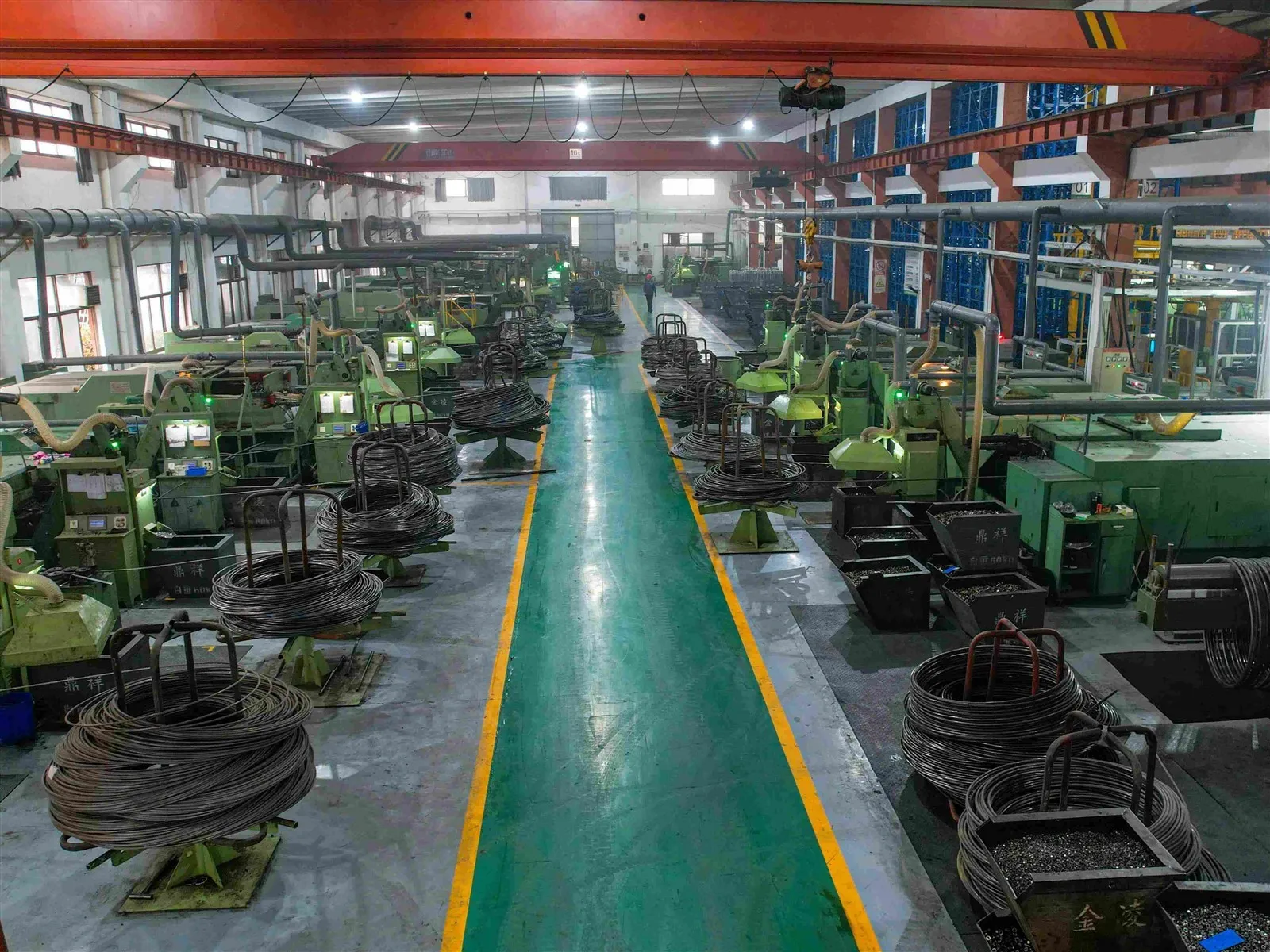


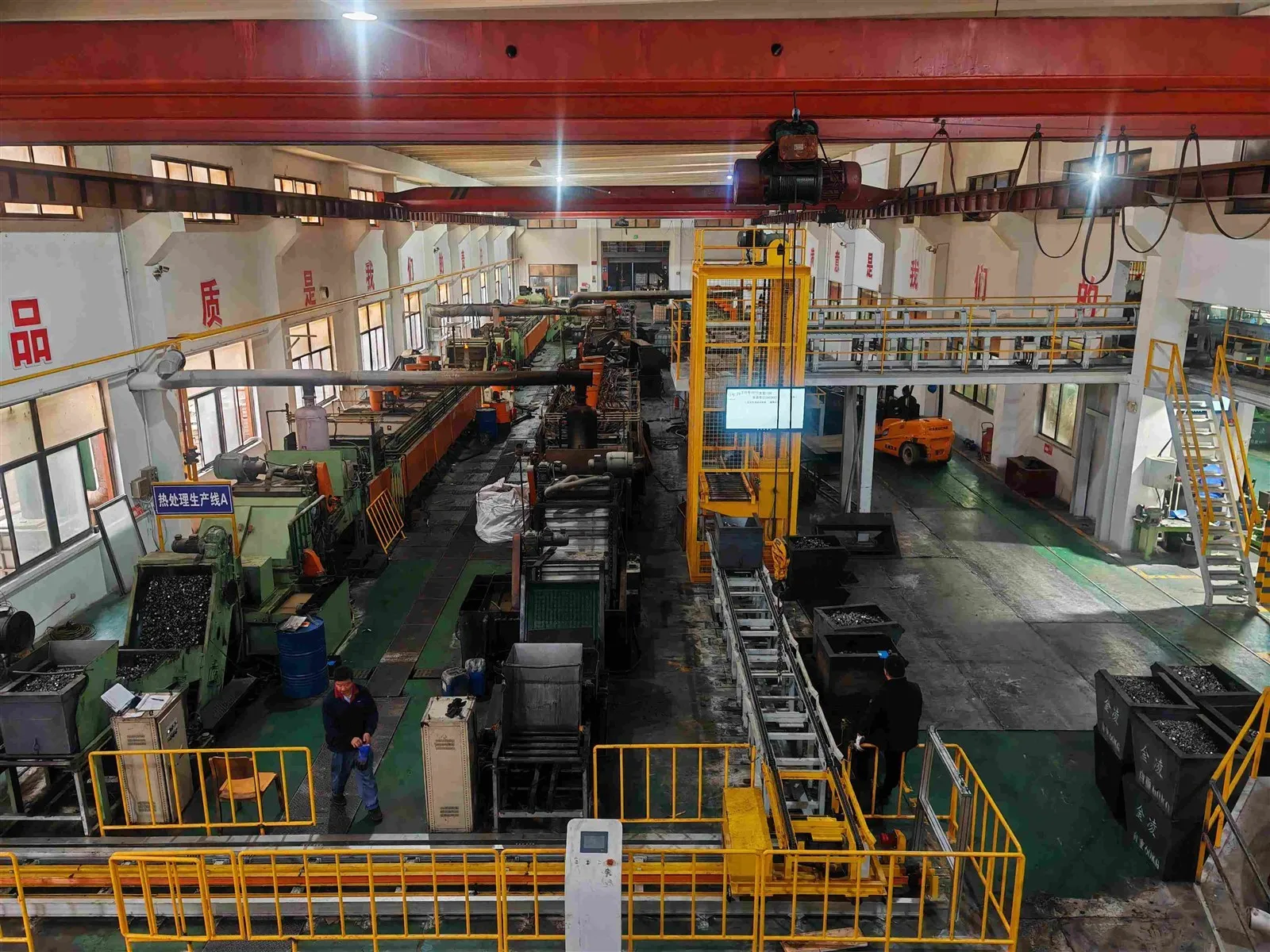
Hot Tags: din931 din933 hex bolts, China din931 din933 hex bolts manufacturers, suppliers, factory, bolts, Din931 Din933 Hex Bolts, Din960 Din961 Hexagon Head Cap Screws, hex bolt, Industrial Square Head Bolts, Non Standard Bolts


