Common Nut Material Classification
Dec 10, 2025
Carbon Steel Nuts
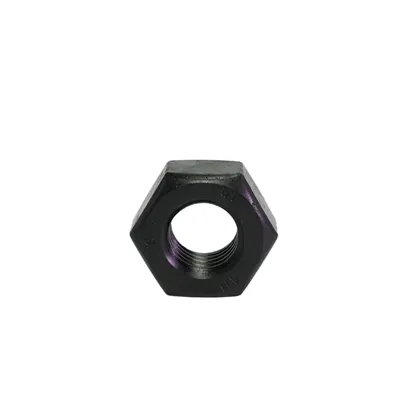
Carbon steel is the most basic material for nuts, with a carbon content between 0.12% and 2.0%. Hardness can be adjusted through heat treatment. Based on strength grade, they are divided into 4.8, 8.8, and 10.9 grades (the numbers represent the ratio of tensile strength to yield strength). For example, 8.8 grade carbon steel nuts have a tensile strength of 800 MPa and are suitable for general mechanical connections; 10.9 grade nuts are used in high-load applications, such as automotive engines. Carbon steel nuts are low in cost and easy to process, but have poor corrosion resistance, requiring surface treatments such as galvanizing and blackening (blackening can improve rust resistance) to extend their lifespan.
Stainless Steel Nuts
Stainless steel nuts are known for their corrosion resistance. Common materials include 304 (06Cr19Ni10) and 316 (06Cr17Ni12Mo2). 304 stainless steel contains 18% chromium and 8% nickel, suitable for general corrosive environments; 316, due to the addition of molybdenum, has stronger resistance to pitting and crevice corrosion and is often used in marine or chemical industries. Stainless steel nuts are more expensive (approximately 2-3 times the price of carbon steel), but require no additional surface treatment and maintain their shine for a long time.
Alloy Steel Nuts
Alloy steels, such as 40Cr and 35CrMo, have their properties enhanced by the addition of elements like chromium, molybdenum, and vanadium. These nuts have high strength (up to grade 12.9) and excellent high-temperature resistance, and are often used in high-stress environments such as aerospace and heavy machinery. Alloy steel nuts require quenching and tempering treatment, a complex process that leads to higher costs.
Copper Nuts
Copper nuts (such as H62 brass) have excellent electrical and thermal conductivity and strong corrosion resistance, and are often used for electrical connections or in applications requiring frequent disassembly. They are more expensive, but due to their soft metal properties, direct mating with hard materials should be avoided to prevent seizing.
Plastic Nuts
Plastic nuts (such as those made of nylon or polyethylene) are lightweight, have good insulation properties, and are resistant to chemical corrosion, making them suitable for light-load applications such as electronic equipment and medical devices. They have lower strength and are typically used in conjunction with plastic bolts.